Engineering
 Production automation
 Testing
 Virtual accident experience
 Innovation
In previous articles about the AUREL pedestrian protection laboratory, we introduced its facilities and capabilities. Now, let’s focus on the core of these tests – the tools without which modern passive safety development would not be possible. We will focus on impactors and their specific use in physical testing. As this is a broad topic, we will cover it in a series of articles.
Why is pedestrian protection so important?
Pedestrians, together with cyclists, are among the most vulnerable road users. Their protection is not “just” a scoring factor in safety assessments – it is a response to a real global issue with a direct impact on public health and mobility. According to the latest statistics from the World Health Organization (2023):
- Approximately 1.19 million people die annually in road traffic accidents worldwide
- More than half of these are vulnerable road users – pedestrians, cyclists, and motorcyclists
- Non-fatal injuries are estimated at 20–50 million cases per year
- Pedestrians account for roughly one quarter of all fatalities
In a collision with a vehicle, pedestrians have no structural protection, unlike vehicle occupants. The impact energy is transferred directly to their body – first to the lower limbs, then to the pelvis and torso, and finally to the head. This is why pedestrian protection is an integral part of international homologation requirements as well as independent safety ratings (e.g. Euro NCAP). Automotive manufacturers and their suppliers must meet strict requirements to reduce injury risk under defined impact scenarios.
At the same time, developers face a fundamental dilemma:
- The vehicle body must be sufficiently rigid to protect occupants in a frontal collision
- At the same time, it must be “compliant” in areas that may come into contact with a pedestrian to minimise the risk of serious injury
Balancing these conflicting requirements is only possible through precisely defined tests and tools capable of realistically simulating the biomechanical response of the human body. This is where so-called impactors come into play. AUREL operates the only pedestrian protection laboratory in the Czech Republic that uses these impactors and enables customised testing for specific cases.
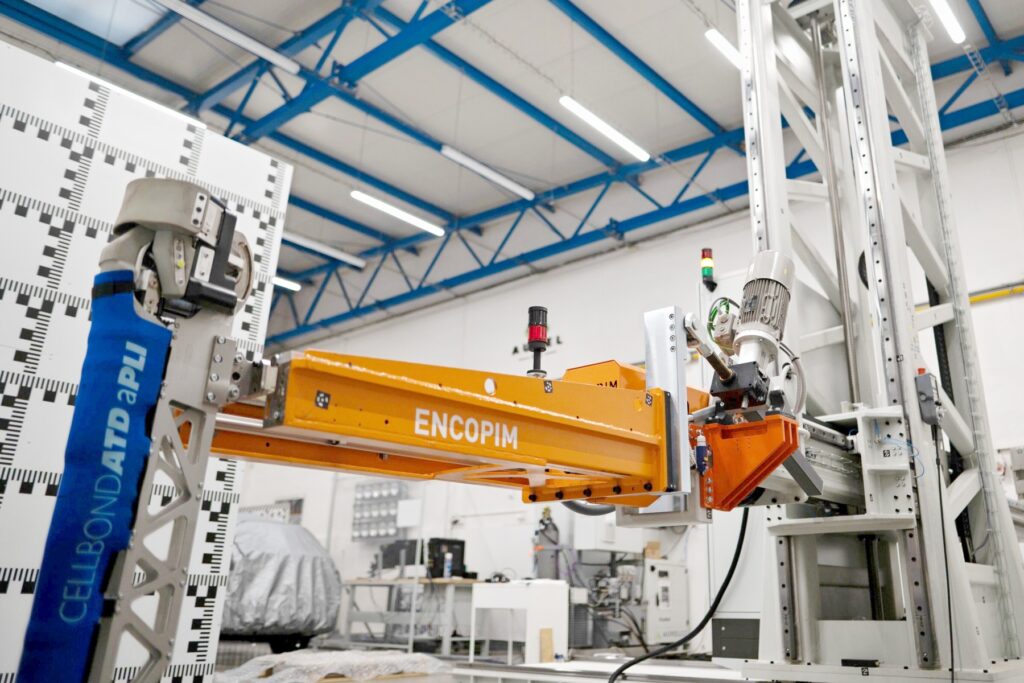
What are impactors and what are they used for?
An impactor is a simulation model of a part of the human body equipped with sensors, designed to quantify injury risk during a collision with a vehicle. It measures acceleration, forces, and bending moments, providing data directly comparable to regulatory limits.
The use of “live” testing is impossible for obvious reasons:
- Ethics – testing on humans is unacceptable
- Repeatability – the human body is a biologically variable system that cannot be standardised
- Accuracy and comparability – development requires precisely defined and repeatable conditions
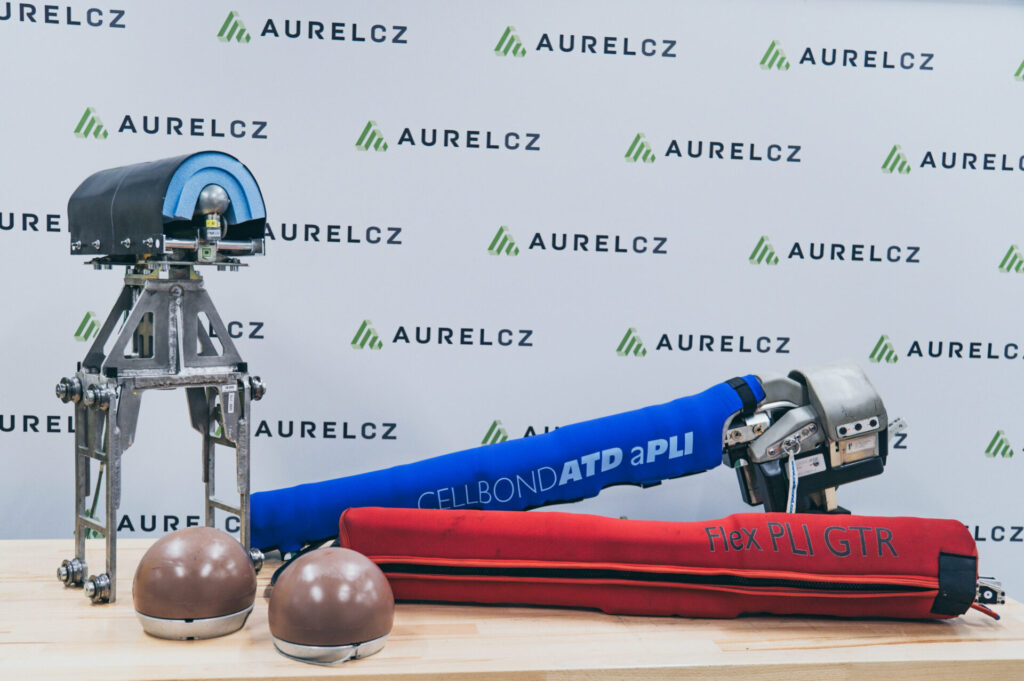
In pedestrian protection testing, the following are used:
- Head impactors (child and adult)
- Lower limb impactors (upper and lower leg)
Each has precisely defined mass, geometry, material properties, and measurement systems. While other biomechanical models exist in different areas of passive safety, these types are key for pedestrian protection. In the following articles of this series, we will explore them in more detail.
The role of AUREL in impactor testing
The Czech pedestrian protection testing laboratory at AUREL provides a complete process – from vehicle intake procedures and measurement of test zones to testing and evaluation of impact data. In addition to testing itself, the team also supports the interpretation of results in cooperation with the customer’s design and simulation departments. The laboratory holds international accreditation in accordance with EN ISO/IEC 17025.
AUREL is equipped with the technical equipment and technologies for:
- Official homologation and development testing (ECE 127, Euro NCAP)
- Precise measurement of test zones using coordinate systems
- Internal certification and maintenance of impactors, including verification of their dynamic response
A key part of the work is regular calibration, verification of mechanical properties, and validation of measurement chains. Beyond testing, the team also contributes to the development and optimisation of test scenarios in cooperation with OEMs, ensuring that FEM simulation results closely match real physical test outcomes. The integration of simulations and physical laboratory testing is essential – both methods complement each other and contribute to more accurate and reliable results.
Simulation that saves lives
Impactors are not just laboratory tools. They are instruments that translate the laws of physics and the biomechanics of the human body into measurable data – and subsequently into concrete design decisions. Without them, it would not be possible to systematically develop vehicles that protect not only their occupants but also pedestrians. In the next parts of this series, we will take a closer look at individual types of impactors, their design, measurement principles, and specifics of data evaluation.
Interested in how your vehicle or its components perform in pedestrian protection tests? Contact AUREL experts and discuss tailored homologation and development testing options for your project.