Engineering
 Production automation
 Testing
 Virtual accident experience
 Innovation
Today, simulations can accelerate vehicle development, test thousands of scenarios and identify issues long before the first prototype is built. But how do experts actually work with them, and does physical testing still have a place in modern vehicle development? We spoke with Jan Fojtášek, Research Fellow at the Institute of Automotive Engineering of the Faculty of Mechanical Engineering at Brno University of Technology, and one of AUREL’s external collaborators, about the integration of virtual development and real-world testing, the future of homologation and the role of proving grounds.
Mr Fojtášek, how would you define your role within current research activities, and which key projects are you currently focusing on?
For many years, I have been working to advance the use of virtual vehicle models towards a point where simulation is not merely a supporting tool, but a trusted part of the development process. My role involves connecting several areas: simulation, experimental validation and the practical requirements of industrial partners. In addition to the technical research itself, I am also involved in coordinating activities between the academic team and industry partners to ensure that the resulting methodologies and tools can be effectively applied in real-world development processes. At present, we are focusing on the parameterisation and validation of vehicle models for virtual testing in accordance with Euro NCAP methodologies. In this area, there is still ongoing discussion regarding the practical verification of complete simulation chains and the required level of accuracy in relation to real-world testing.
You have been involved in numerous projects with industry partners, including close cooperation with Škoda Auto. How important is this connection between academia and the real-world needs of manufacturers?
Cooperation with industry is absolutely essential for us for several reasons. There is nothing preventing us from developing our own solutions based on our knowledge and experience; however, if we do not work on these solutions together with commercial partners, the outcomes will not meet their requirements. As a result, they would be very difficult to apply in practice. At the same time, we rely on the expertise and resources of strong industry partners to further develop our knowledge. We then transfer this knowledge into our teaching, ensuring that the subjects we cover provide the greatest possible added value through real-world experience rather than remaining purely theoretical concepts found in textbooks.
What do you see as the greatest benefit of computer simulations in the development and tuning of vehicle chassis systems?
These technologies allow us to identify potential design issues before a prototype is even built, quickly fine-tune and optimise parameters, and assess system limits. This can be done at various levels, ranging from kinematic and dynamic calculations of individual components to the simulation of complete vehicle behaviour under different operating conditions. Simulations are also becoming increasingly important in the design, testing and homologation of modern advanced driver-assistance systems. In this area, it is necessary to test tens of thousands, or even millions, of scenarios, which would simply not be feasible through physical testing alone.
Where do you see the limits of virtual development – the point beyond which simulation alone can no longer provide the answers?
There are many examples, but a typical limitation is the subjective perception of the driver and vehicle occupants. This is such an individual matter that, even with the most advanced simulator, the resulting subjective experience will always differ from that of a real vehicle. Yet in many cases, it is precisely this factor that matters most. From a chassis development perspective, the tyre model and the road surface are key elements, as they may involve local variations in grip, for example. At the limit of performance, tyres experience transient states that are extremely difficult to describe mathematically, not to mention the effects of wear and many other factors. In the field of advanced driver-assistance system simulations, the challenge lies in sensor models, where factors such as reflections, contamination, unusual objects and radar interference all play a role. When simulating a complete vehicle with a driver, sensors, static and dynamic environments, and autonomous functions, all these deviations from reality accumulate, making the resulting level of uncertainty difficult to assess. So perhaps a shorter answer would be to ask which limits simulation has already overcome with demonstrable certainty.
What do you value most about testing at the AUREL Proving Ground, and how does it benefit your work?
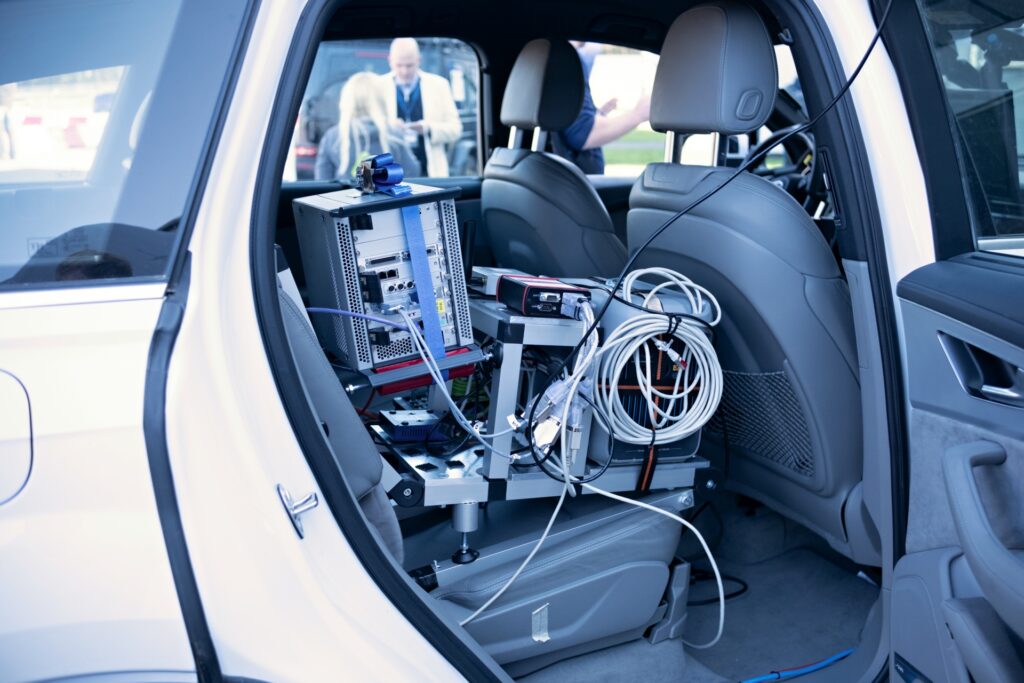
Having sufficient space for dynamic manoeuvres, together with comprehensive facilities for both the vehicle and the test team, is absolutely essential for testing activities. At the same time, the AUREL test areas offer a wide range of conditions that we simply cannot access anywhere else. This provides a unique opportunity to obtain data for our models and further increase their level of validity. It is also, in a sense, a highly stable environment, where we can rely on the fact that if we carry out the same measurements over a number of years, the fundamental conditions associated with the test track remain as consistent as possible.
How does the validation of simulation results using proving ground data work in practice? Where do the biggest surprises usually occur?
The biggest surprise is when you believe everything is running smoothly, all the data checks out, you spend several days testing, systematically changing configurations, measuring everything with “surgical” precision, return home feeling highly satisfied with the results, and then, once the data is fed into the model and the calculations begin, you discover that a data drop-out, noise or distortion occurred during the measurements, causing the results to be completely different from what was expected. Unfortunately, not everything can be detected through visual inspection or simple analysis tools. These are precisely the situations we try to eliminate through rigorous data verification. It is also one of the reasons why we bring along a colleague whose task is to process and evaluate the data on the spot. Looking ahead, our goal is to automate this process, including the wireless transfer of data to a server and the provision of immediate feedback whenever an unexpected issue occurs.
Is there a particular area of chassis systems where physical proving ground testing remains completely irreplaceable?
There are several such areas, despite the ability to perform thousands of virtual iterations and simulated manoeuvres. Real-world testing often reveals issues that were not anticipated during the virtual development phase. Our role is then to describe these phenomena through calculations and, for example, perform sensitivity analyses to determine which factors influence the issue and how it might be eliminated. In most cases, reality highlights a level of detail that initially appeared insignificant from a modelling perspective. Yet the level of detail directly affects the time required for modelling and for obtaining the necessary input parameters. Put simply, today’s modelling tools make it possible to simulate a vehicle at every level, from its movement on the road and interactions between individual subsystems all the way down to quantum physics. The challenge is to create a model that is relevant to the phenomenon being investigated, because every additional layer of modelling and validation requires both time and money. Beyond a certain level of model complexity, it becomes more effective to physically test several real-world variants than to rely on an extremely detailed simulation. Otherwise, the simulation results can end up being analysed for so long that the process turns into analysis paralysis.
How do you view the role of a proving ground as an open-air laboratory for your research projects and the education of future experts?
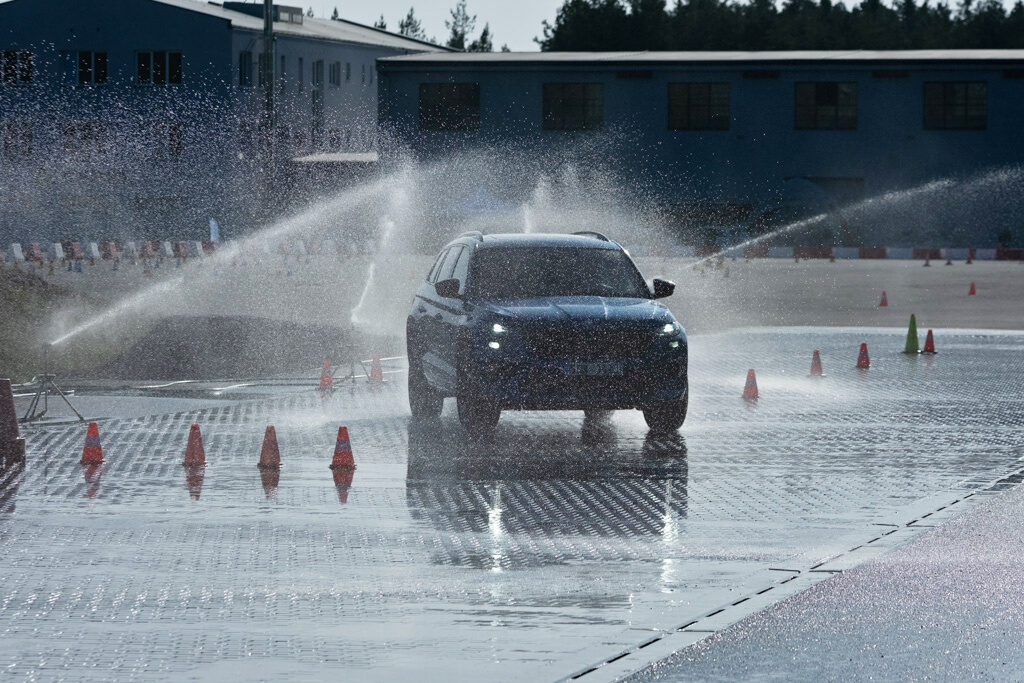
Thanks to its scale, the proving ground provides us with a safe experimental environment. It enables the execution of manoeuvres that are essential for vehicle parameter identification and the subsequent validation of simulation models. In this sense, it serves as a crucial bridge between numerical simulation and real-world system behaviour. Without these capabilities, a significant portion of our research would inevitably remain largely theoretical. While this approach is commonly accepted in many scientific publications and academic studies, our goal is to go beyond the traditional separation of simulation and experimentation. We aim to connect these two worlds as closely as possible and, ideally, integrate them into a consistent development and validation framework. As vehicle systems become increasingly complex, particularly in the fields of ADAS and virtual homologation, simulation and physical testing will continue to converge and complement one another. This is also the reality we want to prepare our students for.
The cooperation between Brno University of Technology and AUREL is already built on solid foundations. Could you outline the areas currently covered by this collaboration and what you are planning for the near future?
The foundations have already been established through project-based cooperation, and we are currently focusing on their further systematic development. The objective is to create a robust framework connecting real-world and virtual vehicle testing. The plans include both individual activities and the coordinated development of methodologies, measurement procedures and modelling approaches that will enable us to describe vehicle behaviour and the behaviour of its subsystems. This work encompasses the preparation of experiments, the definition of input and output data, and the systematic development of simulation models linked to experimentally acquired data, allowing for mutual validation between simulations and physical testing.
If you were to define the “engineer of the future” for the automotive industry, what skills and competencies would they need in order to succeed in an era of artificial intelligence and vehicles increasingly controlled by software?
That is a very good question. If I knew the answer with certainty, I am sure my supervisors would appreciate it. In general, however, I would say that the engineer of the future should be able to absorb new knowledge quickly and learn to use new tools efficiently. Language proficiency, the ability to correctly interpret the problem at hand and the capability to work with technical documentation will be essential. This applies equally to design engineers, electrical engineers and software developers. As a result, there is also a need for a considerable degree of openness to innovative solutions, as well as a certain level of mental resilience.