Engineering
 Production automation
 Testing
 Virtual accident experience
 Innovation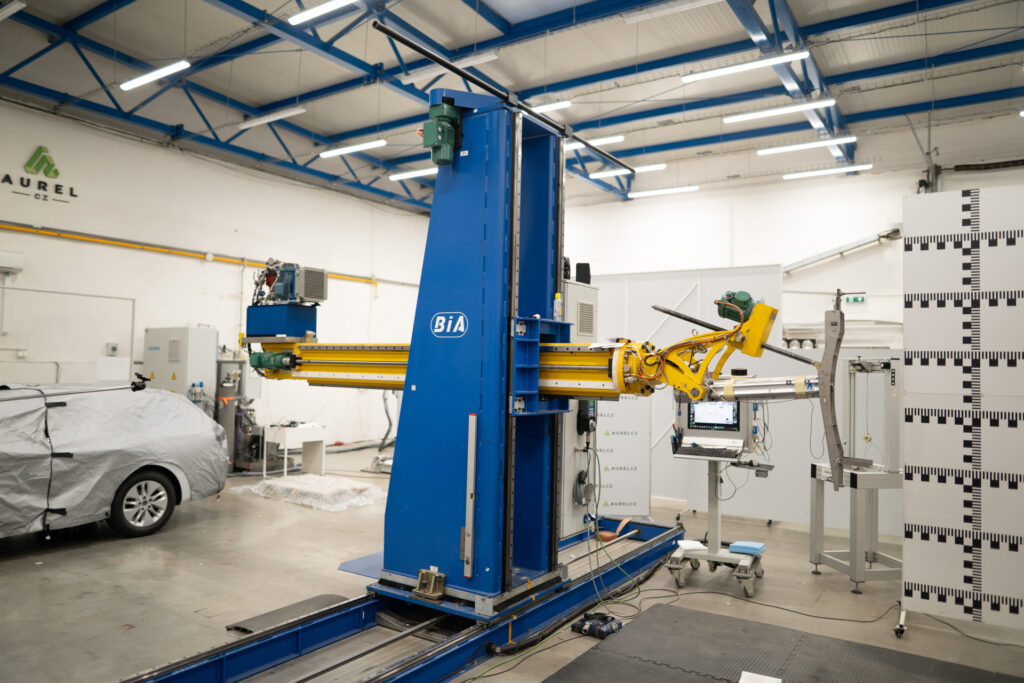
In the previous article, we explained what impactors are and why they are a key tool in pedestrian protection testing. In this part, we focus on impactors simulating the lower extremities of a pedestrian – specifically the area from the ankle to the thigh. In a vehicle collision, the legs are often the first point of contact. For adult pedestrians, they therefore represent one of the most injury-prone body regions.
Why Are Leg Injuries So Common?
In a vehicle-to-pedestrian collision, the bumper typically strikes the lower part of the leg first. The pedestrian’s body is then accelerated and rotates onto the vehicle, resulting in subsequent contact of the pelvis, torso, and head. The lower extremities absorb a significant portion of the impact energy, which often leads to bone fractures, ligament injuries in the knee, or pelvic trauma – frequently with long-term consequences. For this reason, developers place strong emphasis on bumper and front-end design within pedestrian protection testing. This is precisely where lower extremity impactors play a key role.
Upper Leg Impactor
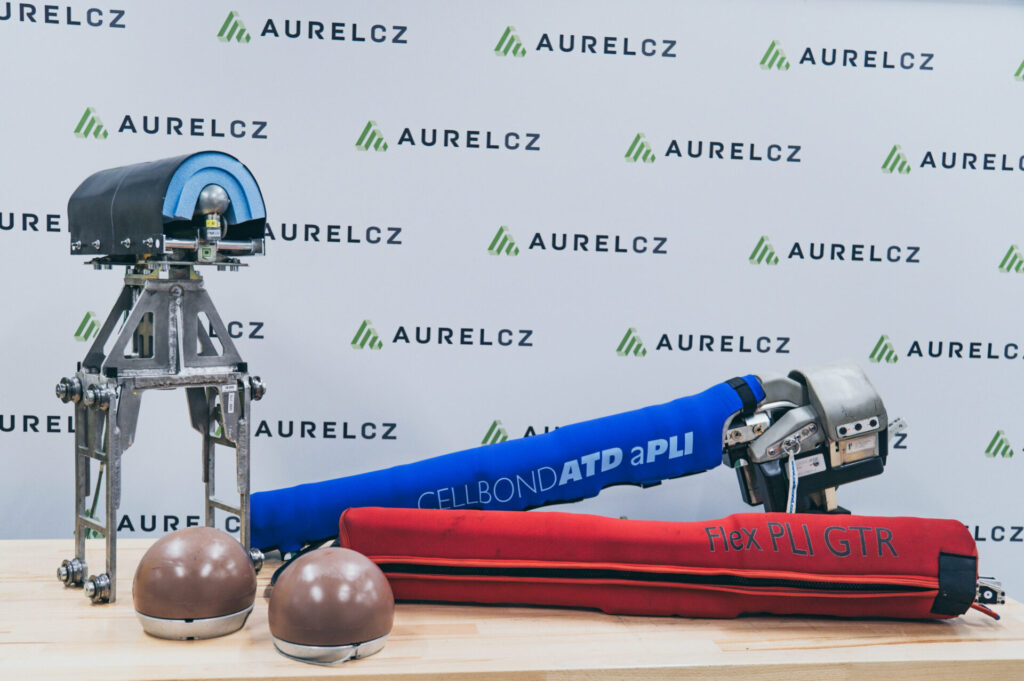
The upper leg impactor, also referred to as the thigh impactor, is used to evaluate the interaction between the vehicle (the upper part of the bumper or the leading edge of the bonnet) and the upper leg. It consists of several key components:
- a steel tube representing the femur,
- foam cladding simulating muscle tissue,
- a system of sensors measuring forces and bending moments.
The total mass of this impactor is typically around 10.5 kg, depending on the applicable regulation. Interestingly, this is the only impactor used in pedestrian protection testing that is mechanically guided during the test. The others have at least part of their trajectory in free flight.
It is commonly used in consumer testing by Euro NCAP. Although it is not mandatory under European homologation regulations for standard passenger vehicles, manufacturers use it for testing so-called add-on protection systems, such as bull bars. More advanced impactors (e.g. Flex PLI) are not yet able to fully replace the measurement of femur loads provided by this upper leg impactor.
Lower Leg Impactor (Lower Legform Impactor): TRL, Flex PLI, aPLI
The primary objective of this test is to assess the vehicle bumper and its interaction with a pedestrian’s leg. During the test, the impactor is propelled towards the bumper at a speed of approximately 11.1 m/s (around 40 km/h), with an impact accuracy required by regulation to be within a tolerance of 10 mm.
Development of Lower Leg Impactors
The first version of the lower leg impactor, known as LLEG (TRL Lower Legform), was developed in the 1980s in a British laboratory and gradually became a standard testing tool. However, it was later found that its biomechanical similarity to the human leg is limited, capturing only a portion of typical injury mechanisms.
For this reason, the more advanced Flex PLI was developed, featuring a more flexible design and a greater number of sensors. These enable the measurement of bending and loads at multiple points along the limb, allowing for a more accurate assessment of potential injuries. This type is used in homologation testing, while in Euro NCAP consumer testing it has already been replaced by the even more advanced aPLI impactor. In addition to enhanced instrumentation, the aPLI also includes an added mass component that simulates the influence of the upper body.
TRL Lower Legform Impactor
The TRL Lower Legform is the oldest type of lower leg impactor and is now rarely used in Europe. It consists of two rigid segments representing the thigh and the lower leg, connected by a flexible knee joint (using single-use steel elements). The entire structure is covered with a foam layer simulating muscle tissue and a compliant “skin”. The total mass of the impactor is approximately 13.4 kg.
During impact, sensors record:
- bending and shear displacement in the knee joint,
- acceleration in the lower leg.
These values are subsequently compared with limits defined in homologation regulations and safety assessment programmes.
Flex PLI – Flexible Pedestrian Leg Impactor
Another lower leg impactor, referred to as the Flex PLI, represents a more advanced solution that more closely replicates the biomechanical behaviour of the human body. This is achieved through several design improvements – both the lower leg and the thigh are formed by flexible beams embedded in polymer segments, and in the knee area the single-use metal elements have been replaced by a system of high-strength steel cables and springs. The overall mass of the impactor remains similar to the earlier version, specifically 13.2 kg.
During testing, the sensors record:
- bending of the bones (lower leg – evaluated; thigh – monitored only),
- displacements and bending in the knee joint (four potentiometers in the ligament area),
- acceleration in the knee.
Selected sensor outputs are compared with the limits defined in current homologation regulations (UN Regulation No. 127), on the basis of which vehicle approval for normal road use is determined.
aPLI – Advanced Pedestrian Legform Impactor
The most advanced lower leg impactor, referred to as the aPLI, is equipped with a greater number of sensors and offers an even closer approximation to the biomechanical behaviour of the human leg. It is structurally based on the Flex PLI, but is visually distinguished by a prominent mass located in the upper part of the impactor. This articulated mass simulates the influence of the pelvis and upper body during impact with the front end of a vehicle. As a result, the total mass of the impactor has increased to 24.7 kg.
The sensor configuration builds on the previous version and is further extended. During testing, the following parameters are monitored:
- bending of the bones (both lower leg and thigh are evaluated),
- displacements and bending in the knee joint,
- acceleration in the knee,
- acceleration in the pelvic region and angular velocity of the pelvis (without defined regulatory limits).

Challenges in Lower Extremity Testing
Simulating an impact on the human leg is technically demanding. The human limb is a complex biomechanical system composed of bones, ligaments, muscles, and joints – and its behaviour under impact is difficult to replicate with high accuracy. As a result, the development of impactors is continuously evolving. Modern versions aim, for example, to:
- better simulate the flexibility of bones and ligaments,
- incorporate additional sensors for more detailed measurements,
- include added mass in the upper section to reflect the load transferred from the upper body during a real-world collision.
For accurate and reliable results, strict adherence to standardised testing conditions is also essential – including precise impact speed, impact point accuracy, correct vertical alignment of the impactor prior to impact, as well as controlled temperature, humidity, and other environmental factors.
How Is Testing Conducted at AUREL?
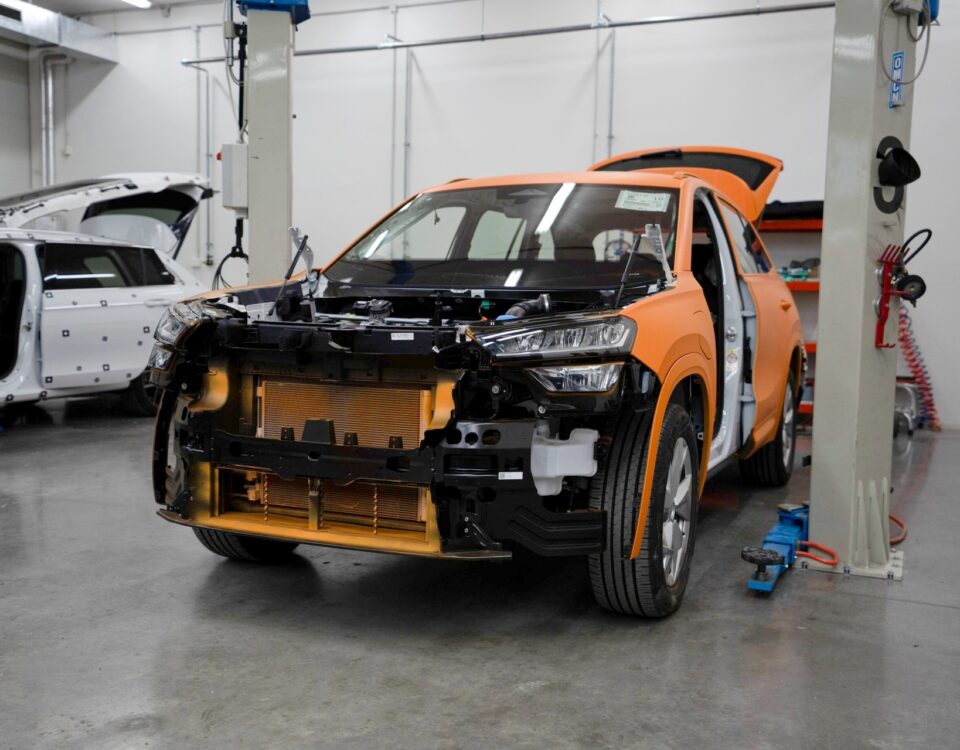
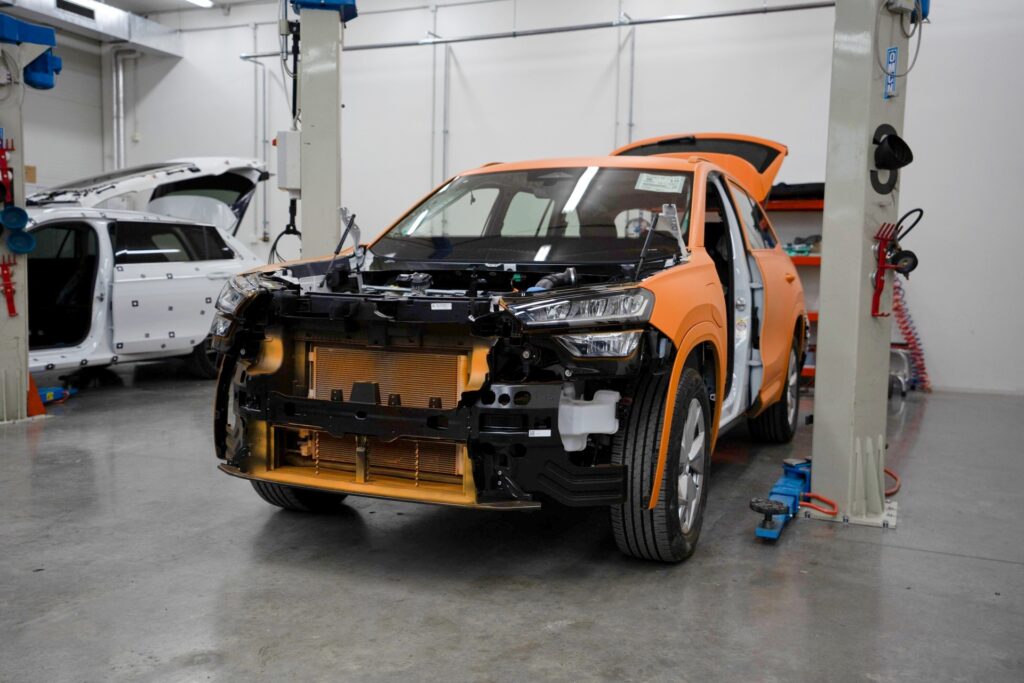
AUREL operates the only pedestrian protection testing facility in the Czech Republic. Preparing a leg impactor test requires highly precise definition of the test zone on the front end of the vehicle. Engineers must determine the height and position of individual structural elements, verify the vehicle geometry within a defined coordinate system, and set the impactor to the exact impact angle so that each test point complies with the required methodology.
An important part of the preparation is also the verification of the impactor’s dynamic response. It is essential to confirm that its mechanical properties meet the prescribed standards, as without this validation the test results would not be reliable. The test itself involves precise positioning of the impactor, its loading, and subsequent detailed analysis of the measured forces and moments. These data make it possible to evaluate the loading of individual parts of the leg and to assess whether the impactor can continue to be used for further testing after repeated impacts.
A Key Tool for Developing Safer Vehicles
Lower extremity impactors enable manufacturers to test and optimise the design of bumpers and the front end of vehicles in order to minimise the risk of serious injury in pedestrian collisions. The AUREL laboratory uses them in both homologation and development testing, combining the results of physical tests with numerical simulations. In the next article in this series, we will focus on another key aspect of pedestrian protection – impactors simulating head impacts.
Would you like to find out how your vehicle performs in pedestrian protection testing? Contact us to learn more about lower extremity impactor testing.