Engineering
 Production automation
 Testing
 Virtual accident experience
 Innovation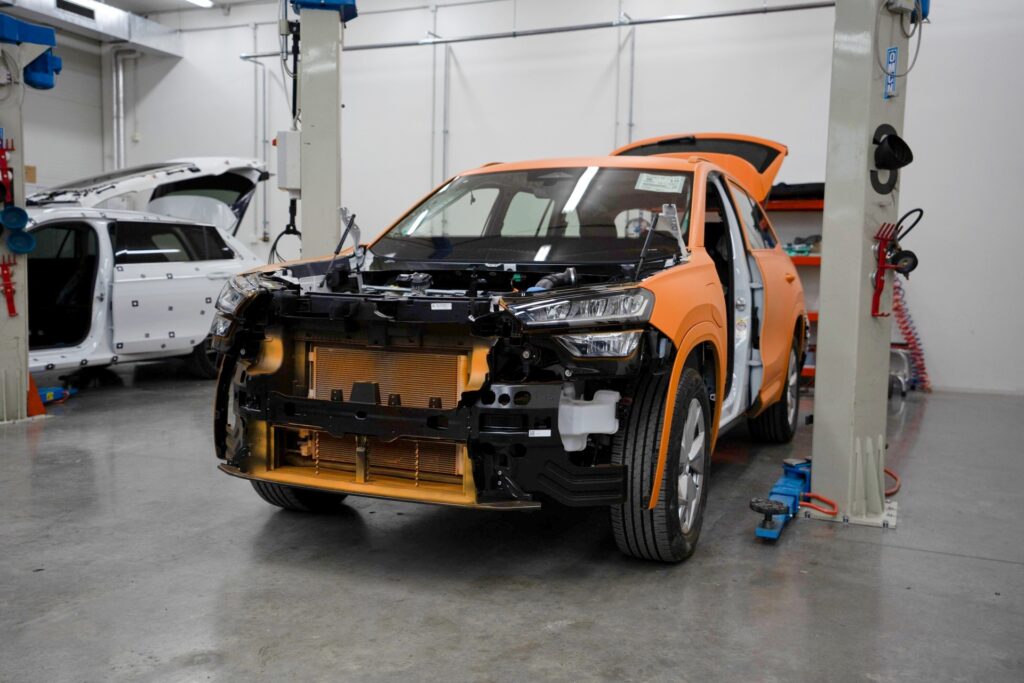
The safety of modern vehicles is the result of hundreds of hours of development, testing, and work under extreme conditions. One of the people behind the fact that today’s vehicles are better able to protect both occupants and pedestrians is Pavel Funk, Head of the Analysis Team in the Safety Department. At AUREL, his team is involved in the preparation and testing of vehicle safety. In this interview, he describes how testing is carried out and explains why a crash test is a unique moment – one that is preceded by hundreds of hours of preparation, precise work, and cutting-edge technology.
Mr Funk, what does your team’s work involve?
Several specialised teams are involved in vehicle testing at AUREL, working closely together as well as with experts on the customer side. Dozens of engineers and technicians commonly work together on individual projects. Our role is to comprehensively ensure vehicle safety – from active elements that help prevent accidents to passive systems that minimise their consequences. We therefore focus on both active and passive safety, which are exceptionally broad and complex disciplines that AUREL has been systematically engaged in for more than twenty years.
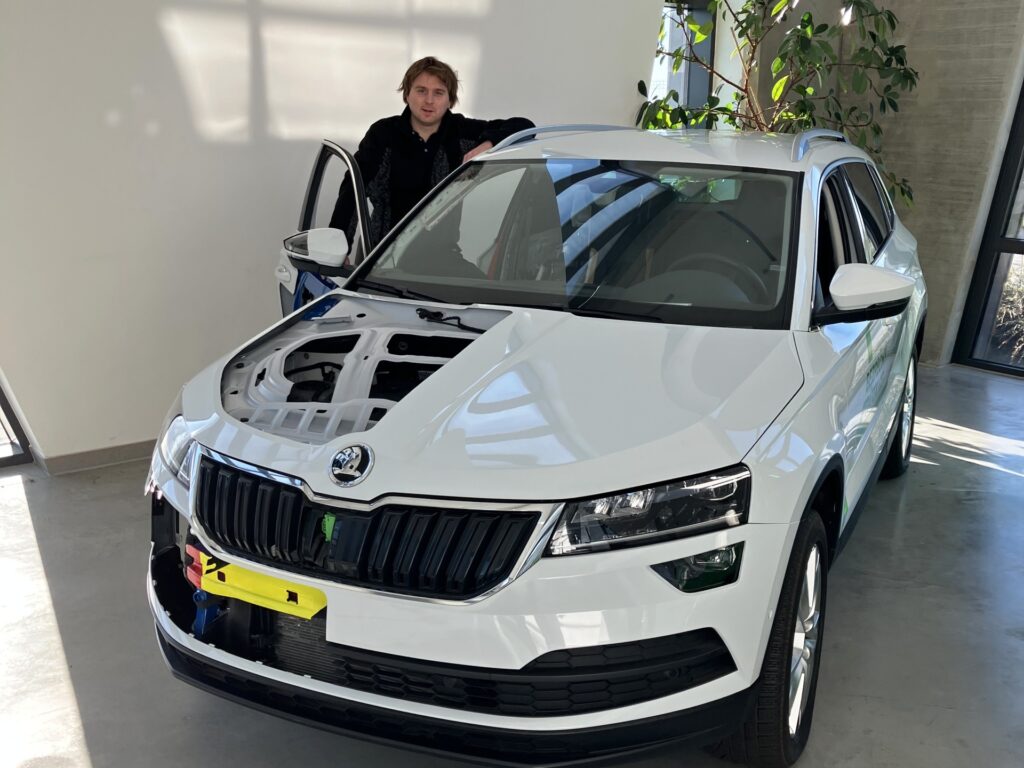
A crash test is a unique event preceded by hundreds of hours of development. What is most important in vehicle preparation to ensure 100% data reliability?
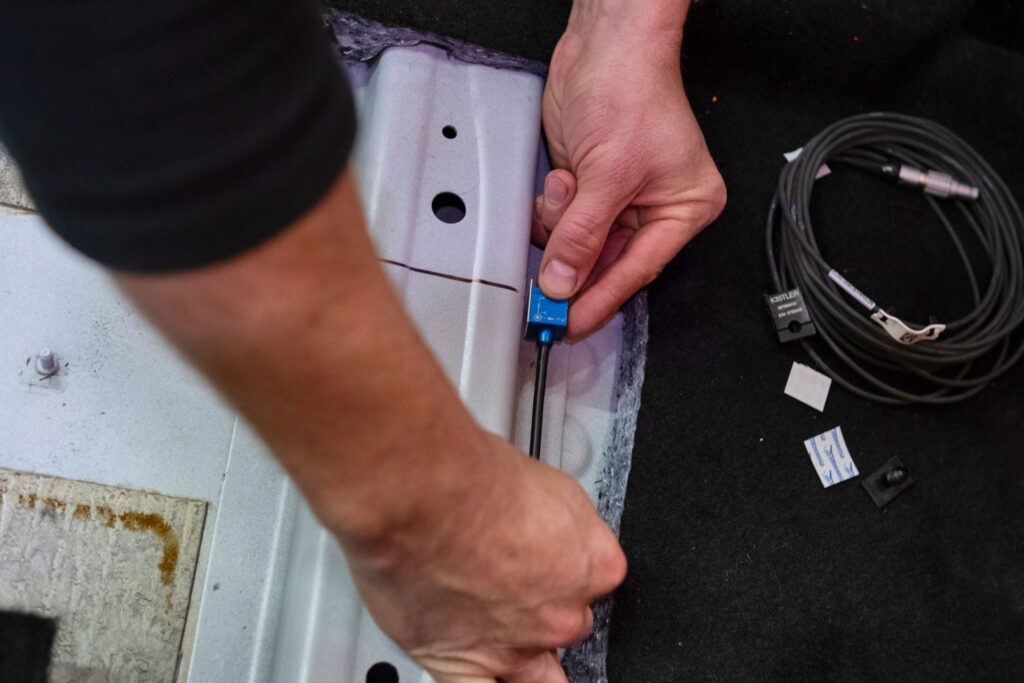
Precision and strict adherence to technological procedures. We must follow the customer specification down to the last detail. Impact tests are extremely costly, and manufacturers are continuously reducing the number of prototypes to save costs. For us, this means that we must obtain the maximum amount of valid data from each test. We equip the vehicle with a large number of sensors, such as force sensors, optical sensors, accelerometers, potentiometers, and others. These must be placed in precisely defined locations, always in the same way. Only then can we eliminate external influences that could distort the results in any way.
Is it true that in a high-speed crash test the team has only one single attempt?
Yes, exactly. A high-speed crash test is an impact test at high speed that simulates a severe road accident. Milliseconds decide, and mistakes are not forgiven. This is reflected in the level of preparation – it must be extremely precise and flawless.
We disassemble the vehicle down to the bare body-in-white and then reassemble the entire interior. During this process, we install external sensors and check all restraint systems. Every detail must be carefully verified to eliminate the influence of repeated assembly. A single loose connection or an improperly mounted sensor is enough — and the entire test is compromised. Given that the costs can reach several million Czech crowns, we simply cannot afford such a risk.
Can you describe how restraint system tests are carried out?
Even before a restraint system is installed in a complete vehicle, car manufacturers use so-called sled tests. These simulate an impact by accelerating or decelerating the vehicle body on a special trolley – the so-called sled. This approach makes it possible to test the functionality of airbags, seat belts, and other safety features without the need to destroy the entire vehicle, making it more cost-effective.
For sled tests, we most often use a catapult, which is used to propel a reinforced vehicle body – thereby simulating an impact. During these tests, we evaluate different types of restraint systems, various interior configurations, and multiple types of dummies. Based on the measured loads on the dummy, we select the optimal configuration, which is then verified in crash tests to ensure it meets all defined safety requirements.
Your team is also involved in misuse tests. What can the reader understand by this?
Specifically, we test so-called Airbag Misuse tests, i.e. the verification of situations in which the airbag should not be deployed. Thanks to precise sensor calibration, the system is able to distinguish a real accident from a normal operational impact within milliseconds. A typical example is hitting a kerb or driving over railway tracks – in such cases, airbag deployment would be undesirable.
The aim is to prevent unnecessary activation of restraint systems, which would lead to costly repairs. After an airbag is deployed, it is often necessary to replace not only the module itself, but also other parts of the interior. Under test conditions, we therefore simulate various real-world scenarios, such as collisions with animals or driving through demanding terrain, and verify whether the system responds correctly.
Why are physical crash tests, in which vehicles are completely destroyed, still carried out today in the era of advanced virtual simulations?
Virtual simulations are very advanced and essential. However, the result of a real crash test reflects the behaviour of the entire vehicle as well as the biofidelity of the dummy. The virtual world is not yet able to replace physical testing in a way that fully reflects real-world conditions.
You mentioned biofidelity. What does this term mean?
Biofidelity expresses the extent to which a dummy behaves in the same way as the human body during an impact. It is a very important parameter in crash testing. If a dummy has high biofidelity, its response to impact – such as head movement, chest deflection, or pelvic rotation – corresponds to how the human body would react in a collision.
What role do modern dummies play?
A huge one. Today’s vehicles are equipped with various levels of safety features and systems – and we need to know exactly how these systems interacts with the human body. As crash testing evolves, dummies are also being improved to more closely replicate the human body. They are also adapting to the increasing body proportions of the population. For example, the THOR dummy is larger, heavier, and has significantly higher biofidelity – its design and materials respond much more like a real human body. Thanks to this, we can measure more precisely the impact of a collision on the biomechanics of the occupants.
What do you use to monitor vehicle behaviour during an impact?
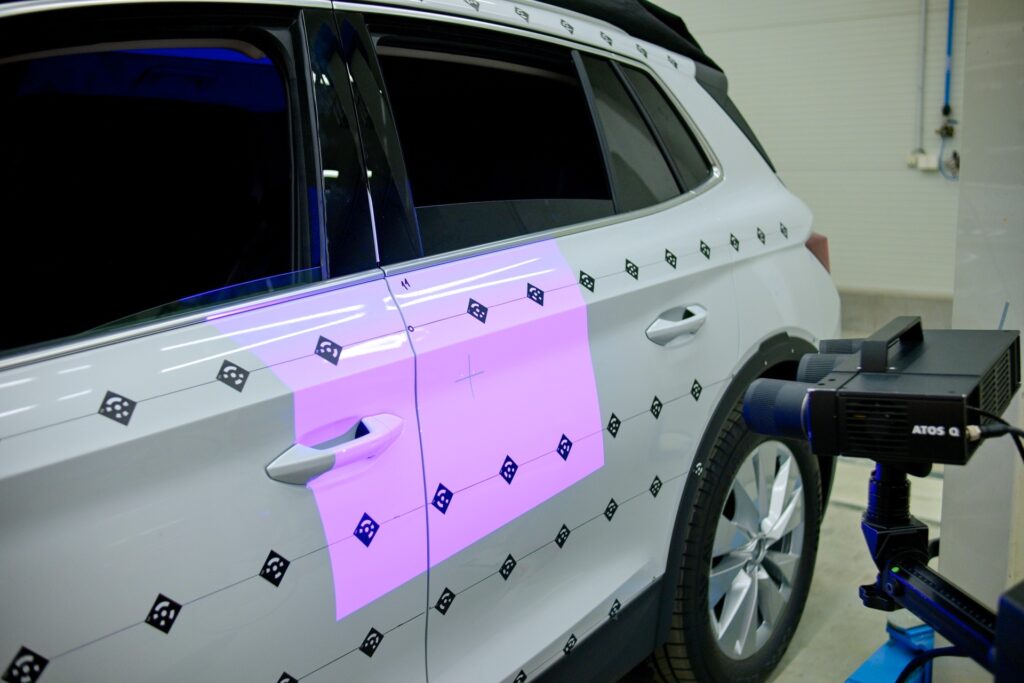
We use a wide range of sensors that measure how both the vehicle body structure and restraint systems behave – accelerometers, force sensors, potentiometers, as well as specialised optical sensors. The impact itself is recorded by high-speed cameras that capture thousands of frames per second. This allows us to significantly slow down the event and analyse the movement of each component in detail. Photogrammetry is also an important method – using images taken before and after the impact, we precisely measure body deformations. For example, we monitor damage to the cross-member between the engine and the cabin to ensure that the minimum survival space for the occupants is maintained.
What role does homologation play in the testing process, and how does it differ from consumer testing such as Euro NCAP?
Homologation is a legal requirement – in order for a vehicle to be used in road traffic, it must meet all legislative requirements. Official homologation is commissioned by the manufacturer from certified laboratories and follows a strictly defined protocol, at the end of which is the well-known “the official ”. Independent consumer tests such as Euro NCAP are not mandatory for car manufacturers, yet most of them use them. For consumers, this is the only way to compare different vehicle brands in terms of safety. Moreover, Euro NCAP is able to respond to changes in real-world traffic much faster than the legislative processes of homologation.
Does the preparation and testing of electric vehicles differ from that of vehicles with internal combustion engines?
The basis is very similar, but for electric vehicles we additionally focus on the high-voltage system. We monitor the integrity of the battery before and after the impact. In addition, after the test we monitor the battery temperature and place the vehicle in a so-called “quarantine” area for at least 24 hours. In the event of ignition, the vehicle would be automatically flooded. Firefighters are always present during these tests. Safety requirements are continuously increasing – both for electric vehicles and conventional vehicles.
You work with vehicle prototypes, which requires maximum confidentiality. How do you ensure strict compliance with confidentiality, NDAs, and the protection of sensitive customer data?
We comply with the international TISAX Level 3 standard, which is the highest level of information security assessment in the automotive industry. In addition, we have a highly developed internal system. For example, we use strictly defined zones – in the so-called “red zone”, no one is allowed without a signed NDA, and there is an absolute ban on photography.
What is the greatest motivation for your team from a development perspective?
When our customer passes homologation and achieves all the required targets in Euro NCAP. And when we meet all the objectives that we defined together with the customer at the beginning of the project. Then we know we have done a good job.
Finally, I would like to ask how you see further developments in vehicle safety. Is there still room for progress?
Definitely yes, vehicle safety is constantly evolving. Active systems today monitor both the surroundings and driver behaviour, such as fatigue, and adjust the driving accordingly or, in extreme cases, bring the vehicle to a stop. The number of sensors, cameras, and sophisticated algorithms that evaluate situations in real time is increasing. Passive safety is also evolving – seat belts, airbags, and other systems are protecting occupants more effectively. The direction is clear – vehicles will increasingly prevent risky situations and provide more effective protection not only for occupants, but also for their surroundings.
Thank you for the interview.