Engineering
 Production automation
 Testing
 Virtual accident experience
 Innovation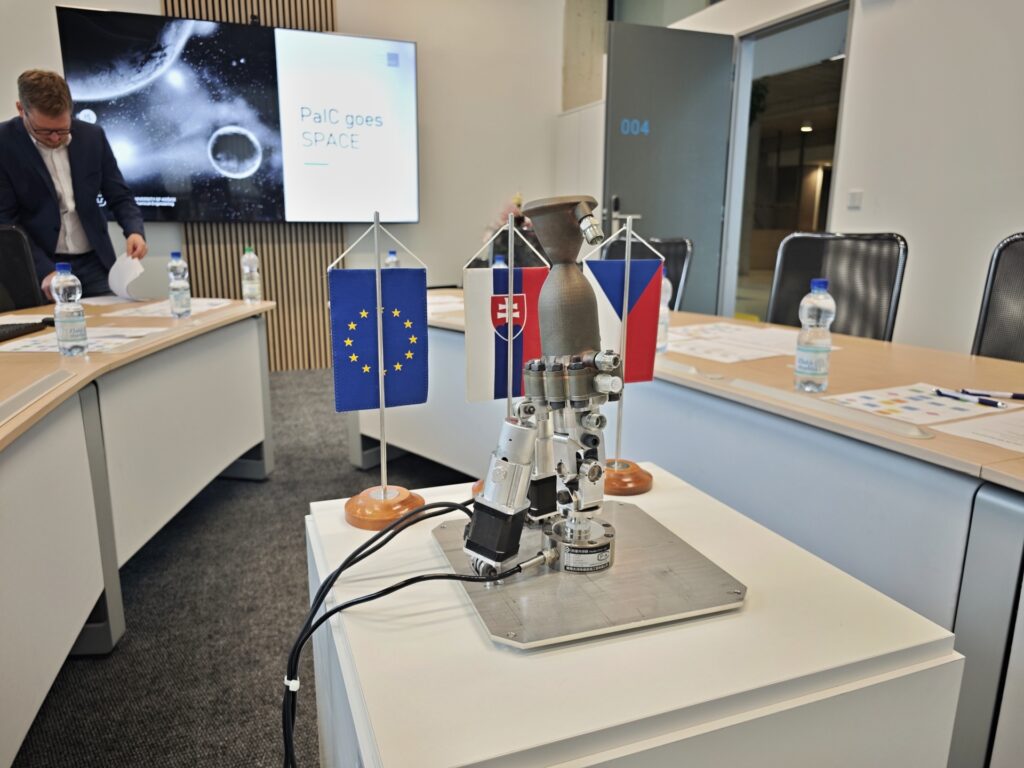
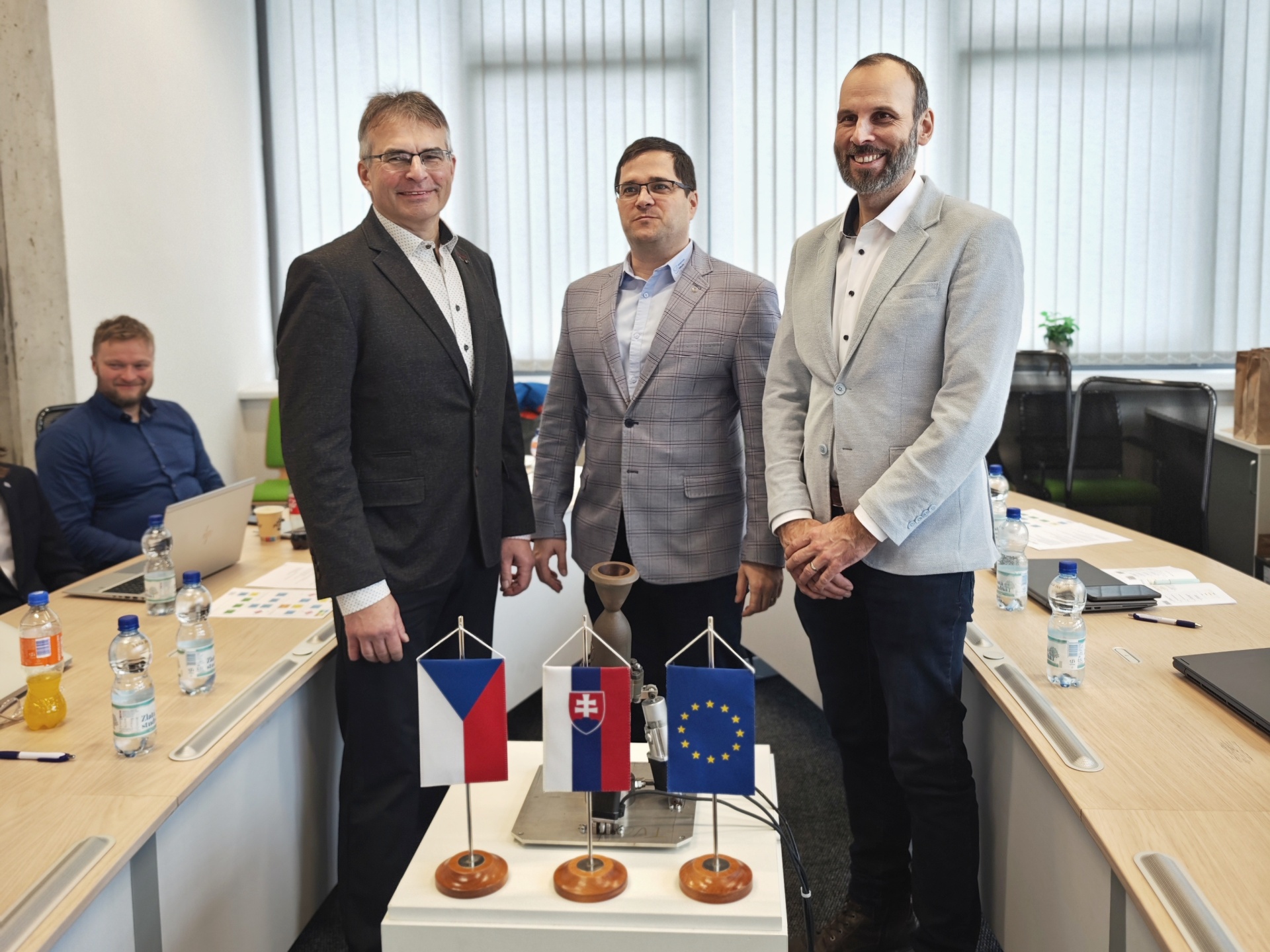
This year at AUREL, we are opening an entirely new technological chapter. In January, in Košice, we confirmed our participation in an international consortium and signed a framework agreement for the JARMIL EPC-2K project – formally marking our entry into the aerospace sector. Building on our experience from technically demanding projects, we are now moving into an environment where requirements for precision, reliability, and qualification process are even higher.
What is JARMIL EPC-2K
The JARMIL EPC-2K project is a development programme focused on a rocket propulsion system. However, it is not limited to design alone – it covers the entire process, from engineering design and numerical simulations to experimental validation and systems engineering.
Within the project, we are involved across the full development cycle, while also entering the European space ecosystem, where technological know-how and credibility for future international collaboration are continuously developed.
“For AUREL and LENAM, the project is strategically important as it allows us to transfer advanced competencies into the aerospace segment,” says Radek Němeček, Aerospace Activities Coordinator at AUREL.
We are not doing this alone
Rocket engine development relies on collaboration between multiple partners. That is why we are part of a consortium in which each partner has a clearly defined role. The Faculty of Mechanical Engineering at the Technical University of Košice (TUKE), together with the Prototyping and Innovation Centre (PaIC), provides strong research and manufacturing capabilities, as well as experience from projects of the European Space Agency. These capabilities are also reflected in ongoing collaborations – TUKE is currently involved in an ESA project focused on air decontamination, running since February 2026, with AUREL and LENAM participating as subcontractors.
Stellar Exploration and Inpraise Systems contribute expertise in space applications and systems design.
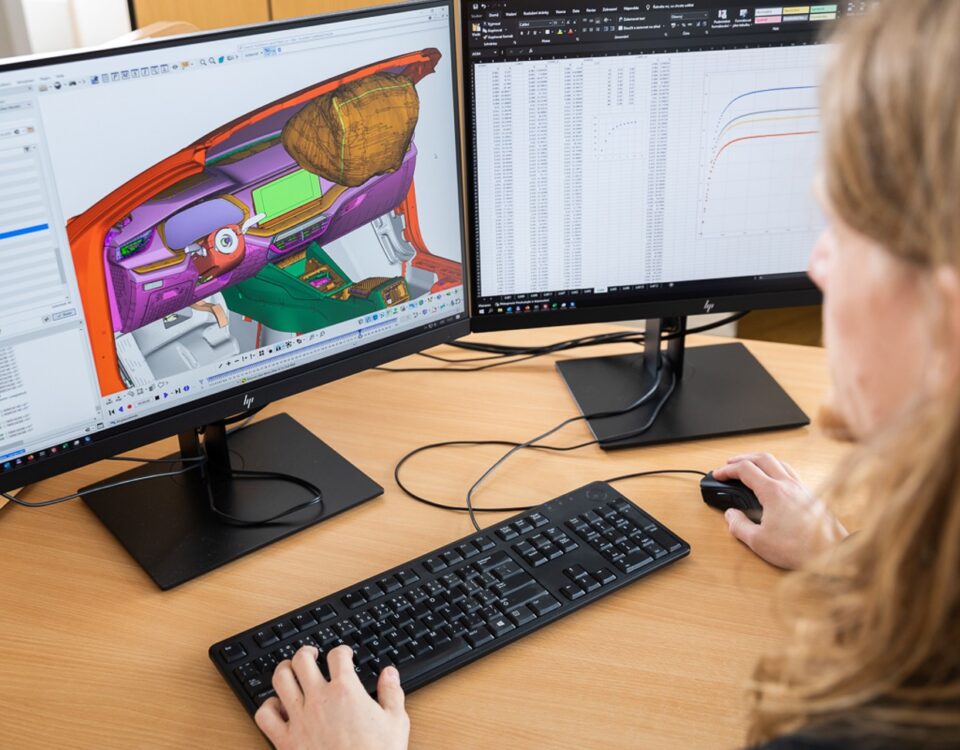
As AUREL and LENAM, we primarily bring experience in numerical simulations, virtual development, and testing of technically demanding systems. This integration of research, development, and practical application forms a strong foundation for the project.
Our role is to ensure that the design works even before the first physical prototype is created. Specifically, we focus on:
- analysis of mechanical and thermal loads,
- assessment of structural integrity,
- validation of key engine components under critical operating conditions.
This allows us to identify weak points early, refine the design, and reduce the risk of issues emerging only during testing. “Our goal is not only to achieve a functional design, but one that is robust, verifiable, and ready for further qualification steps,” explains Radek Němeček.
A different approach to propulsion systems
One of the most exciting aspects of the project is its innovative approach. It explores the use of electrically driven positive displacement pumps – specifically external gear pumps – within a rocket propulsion system.
This opens up new possibilities for designing rocket cycles and may have a significant impact on system performance and overall efficiency. Our current task is to verify whether this concept is viable – first through simulations, and later through real-world testing.

What is different in aerospace
The fundamental principles remain similar to those in the automotive industry –precision, quality, and traceability. The difference lies in the level of formalisation and the strictness of requirements. Within the European Space Agency environment, we follow ECSS standards, which precisely define documentation, validation processes, and quality management requirements.
At the same time, aerospace introduces a completely different level of safety requirements. Rocket systems require careful handling of propellants, protection of personnel during testing, and stricter control of critical components. It is not enough for a system to function – it must be demonstrably safe and repeatable.
Importantly, we are not entering this environment from scratch. The Košice team has experience in the design, manufacturing, and testing of smaller rocket engines and has already contributed to earlier phases of the JARMIL project. They also bring strong expertise in mechanical system design and gear mechanisms, which are essential for pumping systems. Combined with the manufacturing and metrology capabilities of PaIC, this provides a solid foundation for launching the project.
JARMIL EPC-2K as a long-term opportunity
The project is applying for support under the 4th RPA call of the European Space Agency programme, which supports the development of new space technologies. At the same time, we see it as a long-term technological investment.
Even if JARMIL were not selected, we plan to continue through alternative pathways – whether within other European programmes or through a technological demonstrator that will progressively validate the key principles of the proposed solution. Our main objective is to advance the project to a stage where it is technically validated and ready for further development. A key milestone will therefore be the successful validation of the new technological concept, which will determine all subsequent steps.
A step towards more advanced projects
For us, aerospace is not just an extension of existing activities. Over time, it has the potential to become a standalone technological domain focused on the development and testing of propulsion systems – with the future possibility of establishing a dedicated specialised laboratory.
At the same time, experience gained in aerospace will feed back into automotive and other industrial projects. It will allow us to further improve precision, quality, and our overall approach to development.
The JARMIL EPC-2K project is therefore not just a specific contract – it represents a step towards managing more technologically advanced development and working on projects with higher added value.