aurel-logo-dark
✕
  • About us
    • Aurel for the people
    • Blog
  • Competence
    • Passive safety
    • Development of gearboxes
    • 3D measurement
    • Experimental Laboratory
    • Virtual modelling
    • Application development
    • Traffic safety
    • Damage Prevention Fund
    • Testing
      • Tensometry
      • Testing
    • Traffic accident simulator
    • Automation of Production
    • Innovation
      • TorqGuardPro
      • ForeScan3D
  • Test room
    • Pedestrian protection test facility
  • Proving Ground
  • Surface treatments
    • Passivation
    • Degreasing
    • Phosphating
    • Powder coating line
    • Assembly and special applications
    • Quality
    • Logistics
  • Logistic
  • Contact
  • EN
    • CZ
    • DE

We are a member of Colegium holding

+420 605 009 909

info@aurelcz.eu

Careers
  • EN
    • CZ
    • DE
aurel-logo-dark
  • About us
    • Aurel for the people
    • Blog
  • Competence

    Engineering

    • Passive safety
    • Development of gearboxes
    • 3D measurement
    • Experimental Laboratory
    • Virtual modelling
    • Application development
    • Traffic safety
    • Damage Prevention Fund

    Production automation

    • Automation of Production

    Testing

    • Tensometry
    • Testing

    Virtual accident experience

    • Traffic accident simulator

    Innovation

    • TorqGuardPro
    • ForeScan3D
    • Passive safety
    • Development of gearboxes
    • 3D measurement
    • Experimental Laboratory
    • Virtual modelling
    • Application development
    • Traffic safety
    • Damage Prevention Fund
    • Testing
      • Tensometry
      • Testing
    • Traffic accident simulator
    • Automation of Production
    • Innovation
      • TorqGuardPro
      • ForeScan3D
  • Test room
    • Pedestrian protection test facility
  • Proving Ground
  • Surface treatments
    • Passivation
    • Degreasing
    • Phosphating
    • Powder coating line
    • Assembly and special applications
    • Quality
    • Logistics
  • Logistic
  • Contact
  • EN
    • CZ
    • DE
aurel-logo-dark
  • About us
    • Aurel for the people
    • Blog
  • Competence

    Engineering

    • Passive safety
    • Development of gearboxes
    • 3D measurement
    • Experimental Laboratory
    • Virtual modelling
    • Application development
    • Traffic safety
    • Damage Prevention Fund

    Production automation

    • Automation of Production

    Testing

    • Tensometry
    • Testing

    Virtual accident experience

    • Traffic accident simulator

    Innovation

    • TorqGuardPro
    • ForeScan3D
    • Passive safety
    • Development of gearboxes
    • 3D measurement
    • Experimental Laboratory
    • Virtual modelling
    • Application development
    • Traffic safety
    • Damage Prevention Fund
    • Testing
      • Tensometry
      • Testing
    • Traffic accident simulator
    • Automation of Production
    • Innovation
      • TorqGuardPro
      • ForeScan3D
  • Test room
    • Pedestrian protection test facility
  • Proving Ground
  • Surface treatments
    • Passivation
    • Degreasing
    • Phosphating
    • Powder coating line
    • Assembly and special applications
    • Quality
    • Logistics
  • Logistic
  • Contact
  • EN
    • CZ
    • DE

How Vehicle Homologation Works in the EU: The Journey from Prototype to Road Approval

7. May 2026

Bringing a new vehicle to the European Union market is not just a matter of development and production. Before a vehicle reaches customers and public roads, it must undergo homologation. This applies not only to passenger cars, but also to commercial vehicles, special-purpose vehicles, and other types of vehicles operating in normal traffic. Homologation verifies whether the vehicle complies with all requirements related to safety, emissions, driver assistance systems, or even cybersecurity. This is achieved through dozens or even hundreds of tests, measurements, and inspections. Let us take a closer look at the entire process together.

One Approval for the Whole of Europe

The result of homologation is the so-called Whole Vehicle Type Approval (WVTA). This confirms that the given vehicle type complies with all requirements of European legislation. WVTA then allows the manufacturer to sell the vehicle in all EU Member States.

However, it is not just a one-time approval process. Homologation is a longer procedure carried out in several stages – it begins during the development phase, continues with prototype testing, and also applies during series production. All assessed areas are based on precisely defined European regulations and methodologies.

What Is Covered During Homologation

Homologation covers a wide range of areas – from basic safety requirements and emissions to the increasingly important fields of cybersecurity and the functionality of driver assistance systems. The manufacturer must demonstrate that the vehicle:

  • is safe for both occupants and other road users, 
  • complies with emission limits, 
  • functions correctly in various operating conditions, 
  • withstands both normal and critical scenarios. 

The process therefore concerns not only the vehicle’s design and materials, but also its systems and their behaviour under predefined conditions.

Vehicle Approval Depends on Testing Laboratories

Accredited testing laboratories play an important role in the homologation process and are often part of larger technical organisations. For example, we have long-term cooperation with TÜV SÜD. Testing laboratories carry out the actual vehicle testing and prepare the documentation required for approval.

In addition to standard measurements and functional tests verifying, for example, braking performance, vehicle stability, or the operation of driver assistance systems, more demanding safety-focused tests are also performed.

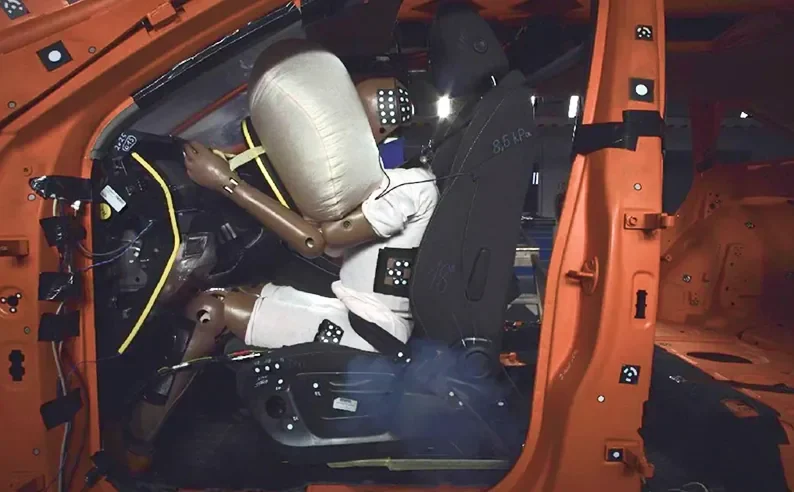
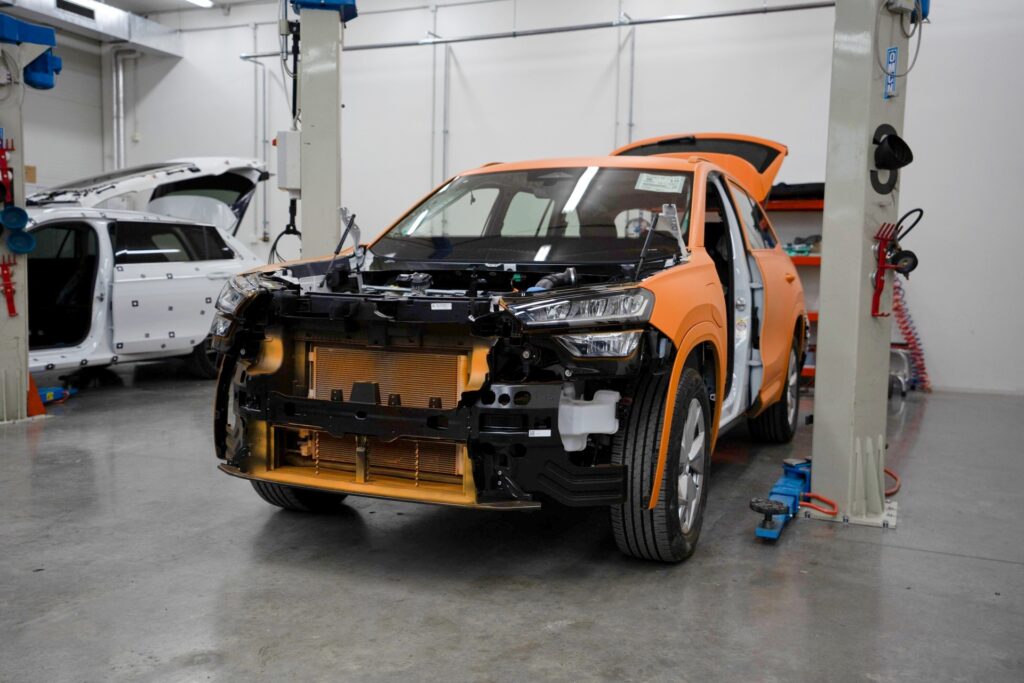
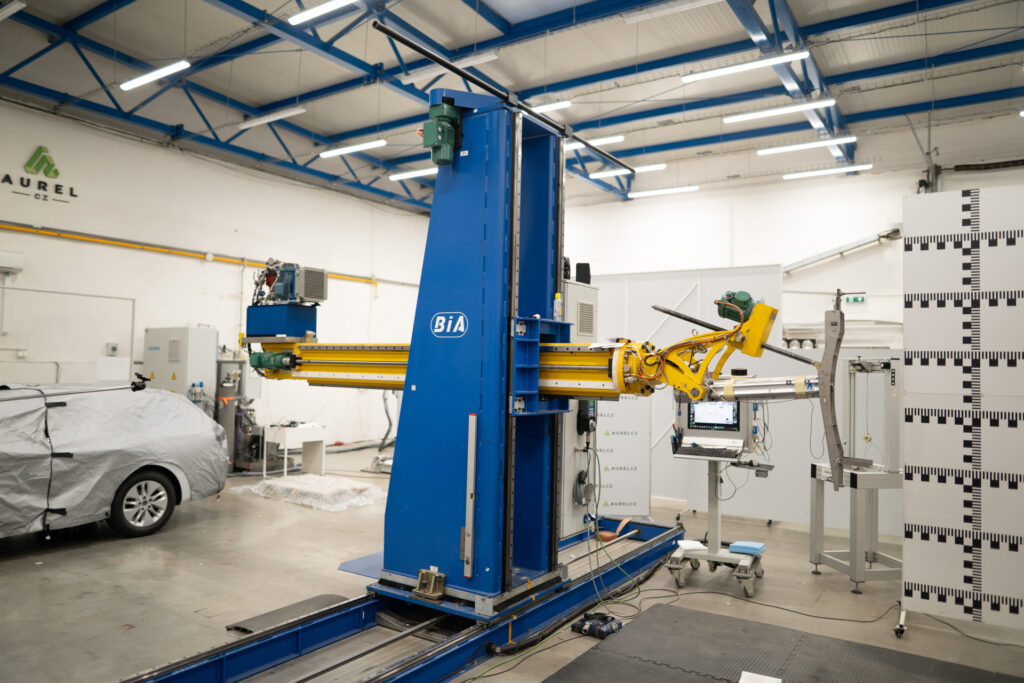
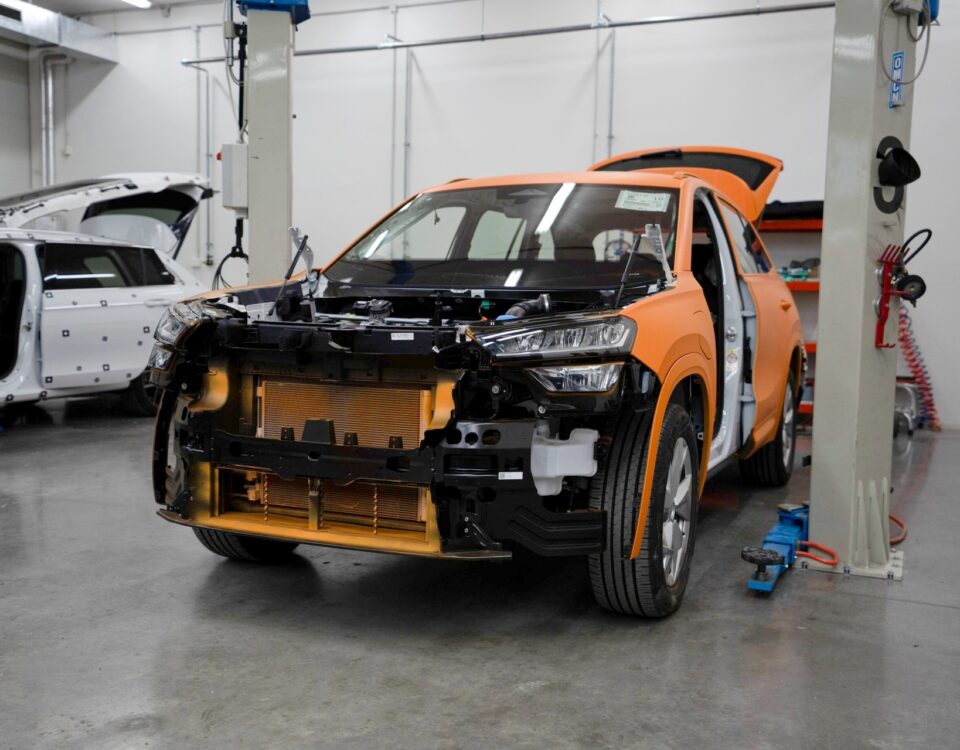
This role is primarily fulfilled by crash tests, which show how the vehicle behaves in a collision and how it protects the occupants. In some cases, specialised equipment simulating specific types of impacts is also used. For example, impactors can replicate contact between a vehicle and parts of the human body and allow precise measurement of injury risk according to defined homologation limits. Crash tests are not something that can simply be repeated. Each one is the result of dozens or even hundreds of hours of preparation. Moreover, they are often performed only once, making it essential to obtain the maximum amount of accurate and reliable data from them.

In some cases, simulations or predefined testing scenarios are also used in addition to standard physical tests. This makes it possible to test the vehicle in situations that would be difficult or costly to create or repeat in a real environment.

Another important step is verifying that vehicles produced in series correspond exactly to the approved prototype. In addition to the correct documentation, the measurement and test results must also match.

Reliable Support for the Complex Homologation Process

Homologation is neither a simple nor a fast process. Manufacturers must navigate extensive legislation, respond to regulatory changes, and at the same time coordinate development, testing, and documentation. The entire process is further complicated by pressure on time and costs – any delay in homologation may result in postponing the vehicle’s market launch.

For this reason, manufacturers involve partners who are familiar with the European environment and help manage the individual stages of homologation. AUREL supports the homologation process as a technical partner connecting testing, engineering expertise, and knowledge of European requirements. We also cooperate with accredited testing laboratories and technical authorities responsible for the actual vehicle approval process. Thanks to our experience with European projects and long-term cooperation with manufacturers and suppliers, we are able to respond quickly and efficiently to the specific needs of individual projects. If you are dealing with the homologation of a vehicle or one of its components, contact us – we will be happy to discuss the specific steps and possibilities for cooperation with you.
Related posts

20. April 2026

When Milliseconds Decide: How Safety in Modern Vehicles Is Developed at AUREL


Read more
16. April 2026

Leg Impactors: From Ankle to Thigh


Read more
7. April 2026

Entering aerospace: what the JARMIL EPC-2K project means for us


Read more

Contact

Are you looking for a reliable solution? Contact us!

 info@aurelcz.eu

Please enable JavaScript in your browser to complete this form.


Acceptance *

Loading

Company headquarters

AUREL CZ s.r.o.
Břehyně 983
472 01 Doksy

ID: 28526392
VATID: CZ28526392

The company is registered at the Regional Court in Ústí nad Labem C 53132

Quick contact

 info@aurelcz.eu

Useful links

Blog
Certification
General terms and conditions of purchase
General terms and conditions of sale of services
General terms and conditions of sale of good
Environmental policy
Subsidized titles
AUREL People
Report AUREL
Digital twin

Links

Cookies
GDPR

© 2026 website created by SEMTIX.cz
    Manage Consent
    To provide the best possible service, we use technologies such as cookies to store and/or access information about your device. Consent to these technologies will allow us to process data such as browsing behavior or unique IDs on this website. Refusal or withdrawal of consent may adversely affect certain features and functionality.
    Functional Always active
    Technical storage or access is strictly necessary for the legitimate purpose of enabling the use of a specific service that the subscriber or user has explicitly requested, or solely for the purpose of carrying out the transmission of a message via an electronic communications network.
    Preferences
    Technical storage or access is necessary for the legitimate purpose of storing preferences that are not requested by the subscriber or user.
    Statistics
    A technical storage or access that is used exclusively for statistical purposes. Technical storage or access that is used solely for anonymous statistical purposes. Without a subpoena, voluntary compliance by your Internet Service Provider, or other records from a third party, information stored or obtained solely for this purpose cannot usually be used to identify you.
    Marketing
    Technical storage or access is required to create user profiles for the purpose of sending advertising or to track the user across a website or across several websites for similar marketing purposes.
    Manage options Manage services Manage {vendor_count} vendors Read more about these purposes
    Preferences
    {title} {title} {title}