Engineering
 Production automation
 Testing
 Virtual accident experience
 Innovation
The automotive industry is undergoing one of the most significant transformations in its history. How is this change perceived by an expert who serves as a bridge between German OEMs and Czech engineering teams? Robert Stoff-Riegel, Business Development Manager at AUREL, shares insights from his hands-on experience. According to him, the key to success lies in the ability to connect – technologies, markets and people.
Mr Stoff-Riegel, to begin with, how would you describe your role at AUREL? What does your position as a “bridge” between leading German OEMs and Czech engineering teams involve?
At AUREL, I operate across the entire German market, particularly within key industrial hubs of the automotive and high-tech manufacturing sectors, without being limited to any specific region. I am wherever our clients are, ensuring we remain close to them while making full use of our international delivery capabilities.
A key part of my role is to act as a genuine bridge between both sides. On the one hand, I have a detailed understanding of the technical requirements and expectations of German clients; on the other, I translate these into clear and actionable assignments for our Czech teams. It is not just about language – it is about bridging differences in expectations, working practices and communication styles. My goal is to combine the best of both worlds: close customer relationships and deep knowledge of the German market with the technical expertise, flexibility and efficiency of our Czech engineering teams.
Do you focus exclusively on the automotive industry?
My primary focus is on the automotive sector and simulation services, where we support both OEMs and suppliers in the areas of development, testing and engineering solutions. At the same time, I am involved in expanding our activities within the aerospace sector, which is a newer but highly promising area for us. I focus on identifying opportunities, building long-term relationships and positioning our capabilities within this highly specialised and regulated industry.
The European automotive industry is undergoing a major transformation – driven by electromobility, autonomous driving, ESG requirements, software-defined vehicles (SDVs), increasing pressure on efficiency, and other key trends. What is the current sentiment in Germany?
I would describe the sentiment as “cautiously pessimistic, with pockets of selective optimism.” Companies fully recognise the need to transform – towards electromobility, software-defined vehicles (SDVs) and new mobility concepts. Significant investments are being made in these areas. At the same time, however, businesses are facing considerable short-term pressures, including high costs, market uncertainty and intense global competition.
One of the main challenges is the transition to electromobility. Demand remains unstable and depends on both infrastructure and customer confidence. The entire value chain is undergoing significant change, particularly for suppliers. Electric vehicles require more electronics and software, forcing many companies to rethink their business models. The shift towards software-defined vehicles and autonomous driving is also having a major impact, requiring entirely new competencies. Many traditional players are still adapting to this transition. Another important issue is regulatory uncertainty, including increasingly stringent ESG requirements and CO₂ emissions targets.
How is all of this being affected by strong competition, particularly from China?
Quite significantly. Chinese companies often benefit from faster development cycles, a strong position in battery technology and a high degree of vertical integration. As a result, German companies are under considerable pressure to increase both agility and cost efficiency. Cost pressure and declining competitiveness in Germany also play a major role. High energy and labour costs, combined with regulatory complexity, are leading some companies to shift investments abroad. This is particularly critical for suppliers, many of whom are already operating under very challenging financial conditions.
In short, the German automotive industry is undergoing a fundamental transformation that is affecting the entire value chain. The key challenge is to manage this transition while maintaining profitability and competitiveness. The companies that succeed will be those that can combine engineering excellence with strong software capabilities, operational efficiency and speed.
Are these challenges specific to Germany, or do they apply across Europe as a whole?
Fundamentally, they apply across Europe, although with varying degrees of intensity. Electromobility, software-defined vehicles (SDVs), increasing regulation and ESG requirements are all Europe-wide issues, often driven by EU policy. Germany, however, is unique in terms of the size and complexity of its automotive supply chain, which makes the transformation significantly more challenging.
At the same time, countries in Central and Eastern Europe – including the Czech Republic – benefit from lower costs and strong manufacturing capabilities, making them attractive locations for both production and engineering services. They are often more flexible and able to respond more quickly to changing market demands, particularly in the context of nearshoring strategies within Europe.
What about countries in Southern Europe?
Southern European countries are still catching up when it comes to large-scale automotive innovation, but they are increasingly establishing strong positions in electronics, software and mobility services. France, for example, is actively supporting its automotive sector through national strategies and investments, particularly in electrification and battery technologies. There are also significant differences in exposure to global competition. German OEMs are deeply integrated into international markets and therefore face direct competitive pressure from China and the United States. Smaller European players tend to be more regionally focused, although this is changing rapidly.
Overall, Europe is facing the same transformation, but with varying levels of pressure, different rates of change and distinct strategic positions. At the same time, this creates opportunities for cross-border collaboration. Companies that can effectively combine strengths from different parts of Europe – for example, innovation in one country and cost-efficient delivery in another – will gain a clear competitive advantage. This is exactly where companies such as AUREL can create real value.
You regularly participate in Czech-German business forums and meetings at the headquarters of OEMs and engineering companies. How do you perceive this role?
Very naturally, because it is something I do on a daily basis. I operate between different stakeholders, aligning expectations and “translating” not only language but also ways of working and thinking. Building relationships, understanding clients’ needs and identifying opportunities for collaboration is something I genuinely enjoy. The key is to build trust. German OEMs expect structure, reliability and clarity. Czech teams bring strong technical expertise, flexibility and efficiency. And it has become clear that AUREL is a particularly strong player in this regard.
One of the challenges is aligning expectations, especially when it comes to communication and processes. German partners often prefer detailed planning and clearly defined commitments from the outset, whereas Czech teams may work in a more flexible and iterative manner. Bridging these approaches requires continuous communication and, at times, adjusting expectations on both sides.
Another challenge is the growing complexity of projects, particularly in the areas of software, simulation and systems integration. This requires very precise definition of requirements and close coordination, as even minor misunderstandings can lead to inefficiencies. As a result, the role of an intermediary is becoming increasingly important, but also more demanding.
Which of the recent Czech-German cooperation events impressed you the most in terms of technological progress?
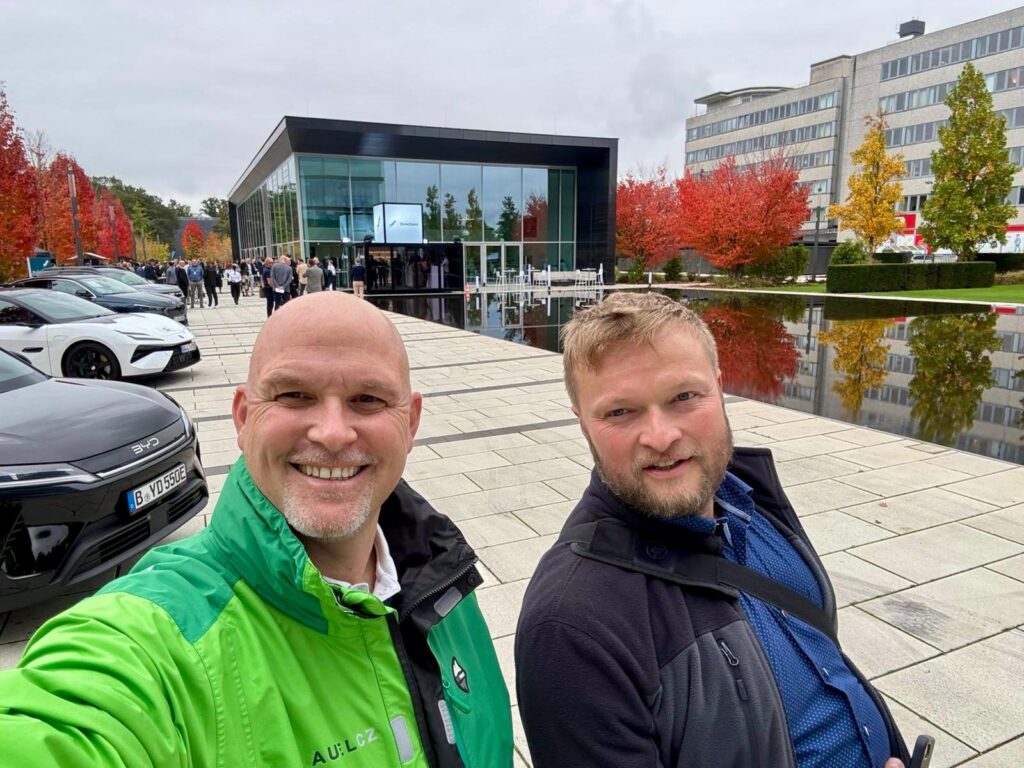
One particularly memorable experience for me was an expert tour focused on electric and autonomous mobility in Berlin, Hanover and Braunschweig. It was not only the technologies themselves that stood out, but also the quality of the discussions with experts, researchers and innovation leaders from across the entire ecosystem. These conversations highlighted just how complex autonomous mobility really is. It is not only about the vehicle itself, but about the entire ecosystem surrounding it – including sensors, infrastructure, software, safety and regulation.
What impressed me most was the combination of advanced innovation, strong collaboration and a clear shift towards ecosystem thinking. OEMs, suppliers, research institutions and the public sector are working together far more closely than they did in the past, and that is very encouraging to see.
How is the perception of Czech engineering companies evolving in Germany? Are they considered equal technology partners for research and development projects?
Very positively, and that represents an important shift. Czech companies are no longer seen merely as a lower-cost alternative. Increasingly, they are regarded as reliable partners for complex engineering and development projects. This is primarily due to their consistent delivery quality, technical expertise and experience, particularly in areas such as simulation, software and systems integration.
That said, when it comes to the most complex R&D projects, German companies still often prefer to keep the most critical elements in-house. However, this is clearly changing, especially as Czech teams continue to demonstrate their capabilities and take on greater responsibility in key project areas.
Overall, Germany – and many other countries as well – increasingly recognises the Czech Republic as a strong and competitive engineering hub within Europe. The trend is clear: towards deeper collaboration and stronger long-term partnerships.
And what about AUREL itself? The company has been one of the leading Czech suppliers to OEM manufacturers for more than 20 years and has maintained a long-standing partnership with Škoda Auto. How does this partnership contribute to AUREL’s credibility with German OEMs?
AUREL’s long-standing cooperation with Škoda Auto is a strong asset when engaging with German OEMs. It demonstrates not only technical competence, but also reliability, process maturity and the ability to consistently deliver results in a demanding automotive environment.
For German clients, this type of reference builds immediate credibility, as it shows that AUREL understands OEM standards, development processes and quality expectations. It reduces perceived risk and significantly shortens the trust-building phase. Overall, this experience positions AUREL as a proven and trusted partner rather than a new or untested supplier.
Thank you for the interview. We will continue our discussion in the next edition, where we will move closer to practical applications. Robert Stoff-Riegel will take a deeper look at AUREL’s role in Czech-German cooperation and share insights into specific solutions and approaches.
If you are interested in how today’s automotive challenges can be addressed in practice and where to look for a competitive advantage, the next part is certainly worth reading – follow our blog for the continuation.